

“The mission of the 53rd CAOS is to provide austere airfield opening, precision approach capability and landing zone services at a moment’s notice anywhere in the world,” said U.S. Air Force Chief Master Sgt. Harley Brydon, 53rd CAOS senior enlisted leader. “It was important for CAOS to embed with the USMC so that we can practice interoperability in accordance with our techniques, tactics and procedures, including learning best practices regarding joint airfield opening post-airfield seizure, and how to do airspace and airfield status reporting in a joint combat environment.”
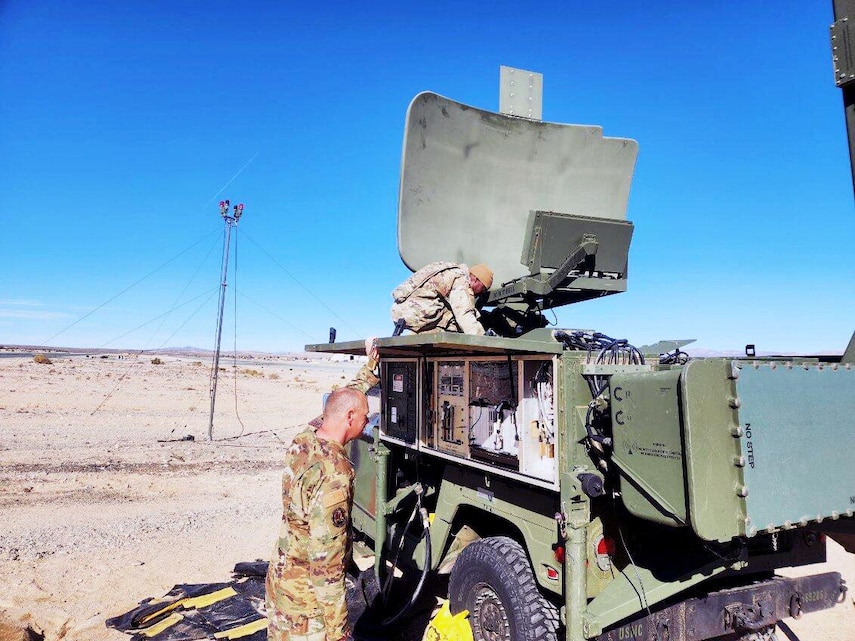
The Robins unit also learned about the radar program Air Traffic Navigation, Integration, and Coordination System, which the USMC has been operating for several years.

U.S. Marine Corps Major Keith Means, MACS-2 air traffic control officer, agrees.
“This collaboration is particularly important for the USMC and USAF air traffic control communities because they are such similar fields,” said Means. “There will always be opportunities, both in peacetime training and in combat, for us to work together and fill gaps that each service may have.”
The mission of MACS-2 is multifaceted in supporting both offensive and defensive air operations. MACS-2 is responsible for detecting and identifying hostile aircraft and missiles within their area of operation. Their radar systems and surveillance capabilities allow them to track and assess potential threats.
“This gave our Marines and Airmen a chance to perform our function as a command-and-control node, pushing and pulling information throughout the exercise to decision makers and the tactical units engaged during the mission,” Means continued. “Having Marines and Airmen work together increases our confidence when working together in the future because we will have a common experience to draw upon.”


“The USAF air traffic controllers also learned joint procedures for Terminal Airspace Control and Precision Approach Radar operations in support of the establishment of the Air Force’s newest deployable Air Traffic RADAR program that is expected to be established at Robins AFB in approximately six months,” said Brydon.
Overall, Brydon described the exercise as successful and that this type of practice builds confidence, which can only be accomplished through strong teamwork and joint collaboration.